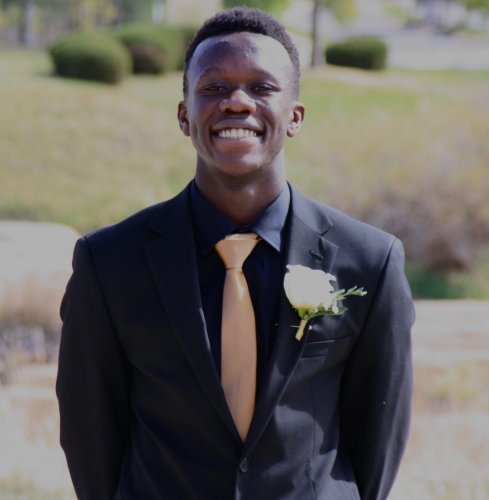
What the term Life-Long Learner means to Clinton Kessey is the desire and ability to learn anything that fascinates him. It doesn’t have to be for money or anything else, but simply the yearning to learn something new that you didn’t know before or participate in something you would have never thought of doing. He longs to be a “Jack of All Trades”, having proficiency in a large array of knowledge and skills.
Clinton’s essay application for this scholarship is worth repeating. It is provided below:
“In my house, rules weren’t suggestions; they were survival. Never steal. Always tell the truth. Always love your family. Simple enough, until I learned that even the people who made the rules could break them.
When I was seven, I broke the first two. Back then, Pokémon cards were the only currency that mattered. Every kid at school flashed these shiny card collections like gold. I wanted to belong too. But my parents never gave me an allowance; they believed work, not money, taught value. So, those cards felt impossibly far away.
One day, I found our family’s coin jar under the kitchen sink. Just a plain jar with old coins and crumpled bills but, to a seven-year-old like me, it looked like treasure. I filled a Ziplock bag, the coins cold and heavy in my hands, and traded them for Pokémon cards. For a moment, I felt like a king.
The victory did not last.
Lies spread quickly; they don’t stop once they start. When my parents noticed the missing jar, I scrambled for excuses. My voice wobbled, my story cracked. When they pressed harder, I broke down and told them everything.
Their disappointment wasn’t loud, it was quiet. Heavy. My dad said, “Trust is earned, not given.’ That silence was worse than punishment; something invisible between us had broken.
For weeks, I couldn’t look at those cards. They sat on my desk like trophies of guilt, reminders of how cheaply I’d sold something priceless. Eventually, I hid them high in my closet. They’re still there, useless, but impossible to throw away. A reminder that trust isn’t worth the price of paper and plastic.
When I was fifteen, the rule I thought unbreakable cracked. The house that once felt solid began to split. Quiet dinners where my mom pushed food around her plate, weekdays when my dad had a ‘long’ workday, arguments seeping through the walls no matter how loud I turned up my music. It felt like watching a house collapse from the inside. I couldn’t fix it, but I could sit with my younger siblings during the noise, make them laugh, watch cartoons, try to make their world feel less broken even when mine was.
This time, I hadn’t done anything wrong, hadn’t stolen or lied. I just watched the rule I’d held closest disintegrate.
At first, it felt unfair. It wasn’t my failure; it was my parents’ failure. But slowly, I began to understand that love isn’t about perfection. It’s about showing up for the people you care about, even when things are fractured.
For me, that lesson meant being there for my siblings, offering stability when everything else felt uncertain. It has meant finding forgiveness when it was the last thing I wanted to give. It has meant redefining love as something active, a choice you practice daily, not just a rule you follow.
Some nights, I still felt like that seven-year-old boy, hiding something too heavy to carry. But this time, there was nothing to confess, only to endure. Watching my home unravel taught me that growth is not a straight line. It’s jagged, uncomfortable, and ongoing.
Looking back, I see how those three rules changed shape as I did. They were rigid, unquestionable commands from my parents. But those life rules were not that simple. They didn’t stay simple, and neither did I.
‘Never steal’ became ‘never take what isn’t yours to rebuild’.
‘Always tell the truth’ became ‘see things for what they really are’.
‘Always love your family’ became ‘love deeply even when it hurts’.
Now, when I glance up at that closet shelf, the cards are still there, faded and irrelevant. But to me, they’re proof. Proof that mistakes can grow into meaning. Proof that broken rules can become something worth living by.
Rules. They’re all broken now, but maybe that’s the point. They didn’t stay rules. They became paths. And I’m still walking them, one imperfect step at a time.”